

Individual Behaviors or Church Activities?
A Way to Understand Christianity in Today’s China
by GAO Shining
October 5, 2010
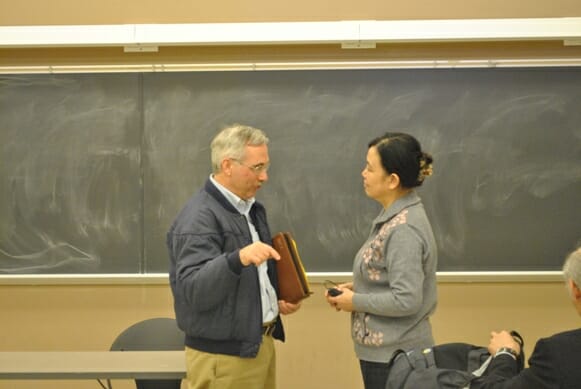
GAO Shining, a well-known Chinese scholar from the Chinese Academy of Social Science, presented a lecture at the Center On Religion and Chinese Society of Purdue University on October 6, 2010. The title of the lecture is: “Individuals Behavior or Church Activities?——the Way to Understand Christianity in Today’s China.”
Based on extensive historical and sociological investigations, GAO argues that the principal approach for Chinese people to understand Christianity has experienced a great transformation from the churches’ social activities to the individual’s faith-based behavior. Before 1949, people get to know Christianity mainly through the churches’ social activities, which have made a great contribution to the modernization of the Chinese science, education, culture, and hospital system, and even the political development.
But this approach to understand Christianity has been blocked since 1949, as the churches’ social participations face strict political restrictions. An alternative and convenient way for the ordinary people to understand the religion is through individual Christian deeds that are considered as moral. Therefore, there is a tendency for the common Chinese people to “moralize” the religion.
However, this new approach to understand Christianity is not the end of the story, but a start point for new transitions. In the 21st century, the churches have experienced remarkable growth and are edging out new spaces for their social participation. The Christian churches are becoming necessary and indispensable actors in the emerging Chinese civil society. As they regain their important role in social affairs, the way for the people to get to know the religion will change accordingly.


个人行为还是教会行为?理解当代中国基督教的途径
高师宁
中国社会科学院
2010年10月5日
2010年10月5日, 来自中国社会科学院世界宗教研究所的高师宁研究员在普度大学中国宗教与社会研究中心举办了一场题为“个人行为还是教会行为?理解当代中国基督教的途径”的学术讲座。
高师宁研究员通过详尽的历史考察和社会学田野调查,着重回答了基督教传入中国以后“人们是如何认识和理解基督宗教的,以及其认识途径经历了哪些变化”等问题。她指出,在1949年之前,基督教在华教会在传教的过程中积极地介入社会文化事务,从事了大量的社会事工,对近代中国的科技、教育、文化和医疗事业,以及政治和法律的现代化都作出了重要贡献。基督教会的所发挥的积极的社会功能成为普通中国人认识基督宗教的主要方式。在这一阶段,基督教信徒占人口的比例虽然很小,但基督教却产生了巨大的社会影响。
1949年以后,基督教会的社会活动收到政治的极大限制,教会所能发挥的社会影响急剧降低。虽然改革开放以来教会经历了快速的发展,教会的社会参与意识也有所觉醒,但仍然面临着相当程度的政治控制。在这种情况下,人们了解和认识基督宗教的途径也发生了很大的变化。他们不再能够通过教会的社会活动,而是通过信徒个人的美好品行来认识基督信仰。基督教也因此越来越有被“道德化”的倾向。
然而,人们将不会一直停留在这种认知途径上。随着2000年以来教会的快速增长,尤其是大量家庭教会开始走向公开化,以及教会社会活动空间的拓展,基督教会将不可避免地再次参与到社会事务中。例如,虽然面临重重阻力,大批的教会还是积极参与到2008年的汶川大地震的抗震救灾的工作中,并在这一过程中经历的快速的增长。随着中国公民社会的形成和发展,基督教会的社会活动空间在不断地拓展,教会将重新参与到社会活动中来,人们认识基督宗教的途径也将随之发生相应的改变。
